The Accepted Build Took Three Model Roles.
The cleanest starting point had no sound. The build with the strongest atmosphere carried a collision bug. Neither file was the whole answer.
The accepted route through the bounded 03.2B slice used three model roles instead: a GPT-5.5/Codex artifact as the seed, a Gemini Flash artifact as the donor, and Gemini Pro as the executor of the graft that one operator selected for follow-on work.
GPT-5.5/Codex primitive: the cleaner flow to preserve.
Gemini Flash primitive: the sound and presentation reference.
Gemini Pro execution: selected within 03.2B after machine and human checks.
That is a composition record, not a ranking of the models. The evidence says which role each artifact played in this slice and which gates the resulting graft crossed.
The cleanest build was silent
Human-terminal review put the GPT primitive second on overall feel, largely because it lacked sound. But it also had the cleaner start and play flow and did not carry the projectile-freeze bug found in the more atmospheric candidate.
The GPT-5.5/Codex primitive was the cleaner seed candidate in this audit; it was a coding-agent proxy cell, not a sterile raw-API baseline.
Play the GPT-5.5/Codex seed and inspect the flow that the graft prompt was told to preserve.
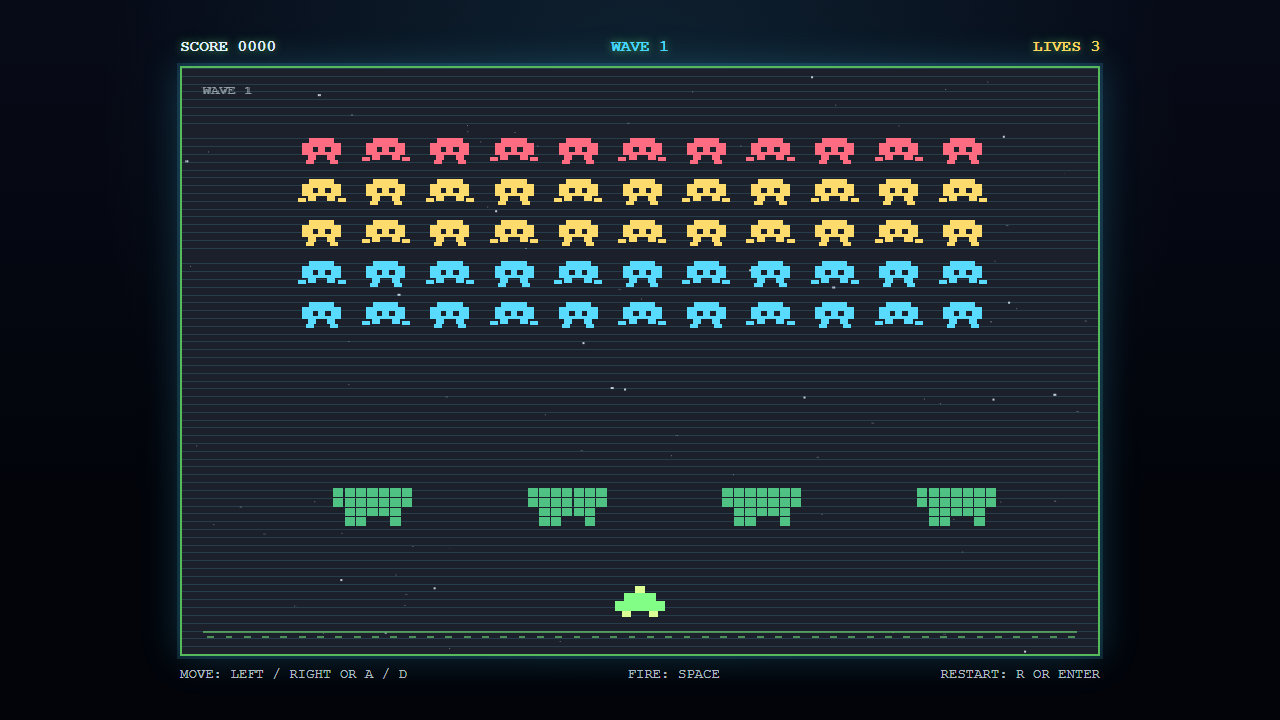
The caveat matters. This cell came through a coding-agent route. It should not be presented as a controlled raw-API comparison against the other primitive cells.
The atmospheric build carried a bug
The Flash primitive ranked first for overall feel in the same one-operator review. It brought sound, a stronger presentation layer, and more atmosphere. It also froze on a projectile-collision path and had weak pause/restart clarity.
The Flash primitive supplied the audio/presentation reference, but its projectile-collision freeze bug made it unsafe as the seed.
Play the Flash donor to see why the useful surface and the unsafe foundation had to be separated.
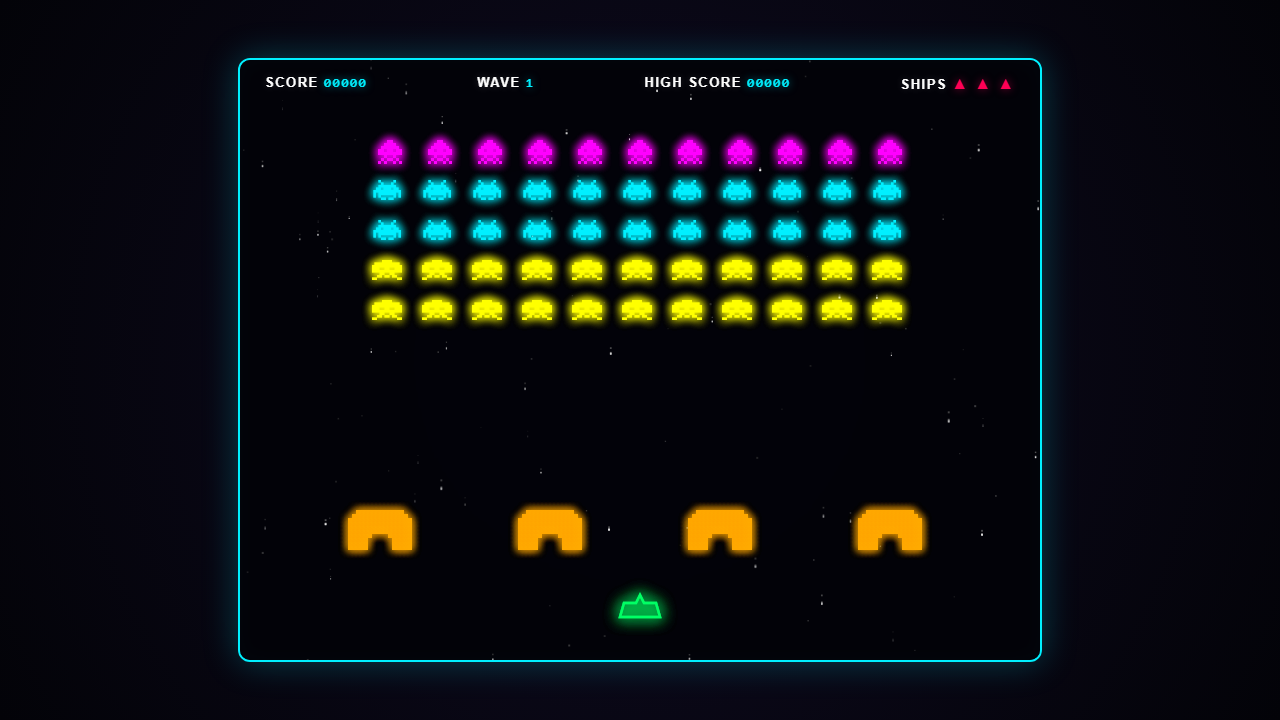
Calling one artifact the donor does not mean its model built every later output. Flash supplied the reference artifact. Flash and Pro then acted as separate executors and produced separate graft candidates.
Define the missing whole before the handoff
The missing whole was not “make the game nicer.” The 03.2B prompt named what had to survive and what had to be added:
- preserve the GPT seed's cleaner flow;
- graft the Flash reference's sound and presentation pressure;
- keep start/restart separate from firing and pause;
- expose visible wave and restart affordances;
- expose a test API compatible with the mechanical driver.
The control contract made the target observable: Enter or a visible button starts and restarts, Space fires during play, P pauses, and R restarts. A normal browser must not auto-start; the headless verification path may do so.
GPT supplied the seed
The seed role answers: which existing state and flow should the executor preserve? Here the answer was the GPT-5.5/Codex primitive.
That choice was narrower than “cleanest code” and different from “strongest atmosphere.” The seed was the artifact considered safer to modify while preserving a coherent start-to-play path.
Flash supplied the donor
The donor role answers: which qualities should be transferred without inheriting the whole artifact? Here the answer was the Flash primitive's sound and presentation pressure.
This distinction kept the collision bug outside the inheritance goal. The handoff asked the executor to use the donor as a reference, not as the codebase to preserve.
The handoff made the roles executable
The same seed, donor, and explicit contract were handed to two executor cells: Gemini Flash and Gemini Pro. Each produced its own graft. Flash executed the Flash graft. Pro executed the Pro graft.
The verifier role was split too. Automated gates checked declared surfaces. One operator then judged practical sound, rhythm, pressure, and play feel. Neither verifier could substitute for the other.
Two grafts passed the named gates
Both graft candidates passed tier 1, space_invaders_driver.mjs, and the UX smoke check after the mechanical probe was hardened to test multiple shield lanes.
| Executor output | Tier 1 | Mechanical driver | UX smoke | Human-terminal verdict |
|---|---|---|---|---|
| Flash graft | PASS | PASS | Low risk | OK; weaker sound/rhythm and pressure |
| Pro graft | PASS | PASS | Low risk | OK; selected base in 03.2B |
Those machine verdicts cover the named contracts. They do not certify atmosphere, gameplay tension, fairness, or replay desire.
One operator selected Pro inside 03.2B
Within 03.2B, one operator selected the Pro graft as the practical follow-on base for stronger sound and gameplay tension.
Play the selected Pro graft and compare its practical surface with the seed and donor above.
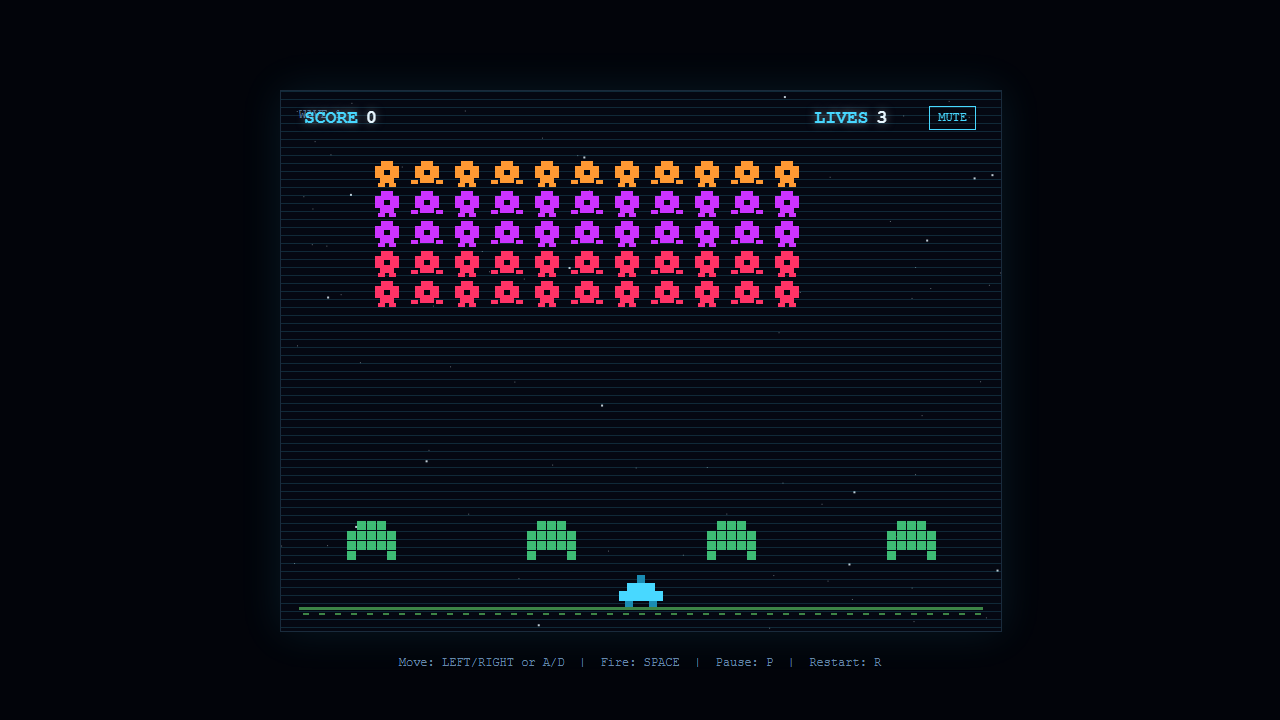
The Flash graft was also acceptable. The human decision distinguished two machine-green candidates; it did not convert the selected artifact into a model-wide or experiment-wide champion. Later design and mechanics overlays belong to later slices and are not part of this acceptance claim.
Verify transitions, not a leaderboard
The useful unit in this audit was a verified role transition:
- choose a seed for the state and flow worth preserving;
- name a donor for the qualities worth transferring;
- give each executor explicit preservation and acceptance criteria;
- record machine verdicts against named gates;
- attribute the practical selection to the human reviewer and bounded slice.
The Space Invaders experiment keeps those roles beside the playable artifacts. That record makes the result reproducible without pretending one score can explain seed quality, donor value, execution quality, and human preference at once.