Primitive / Flash
The neon prior
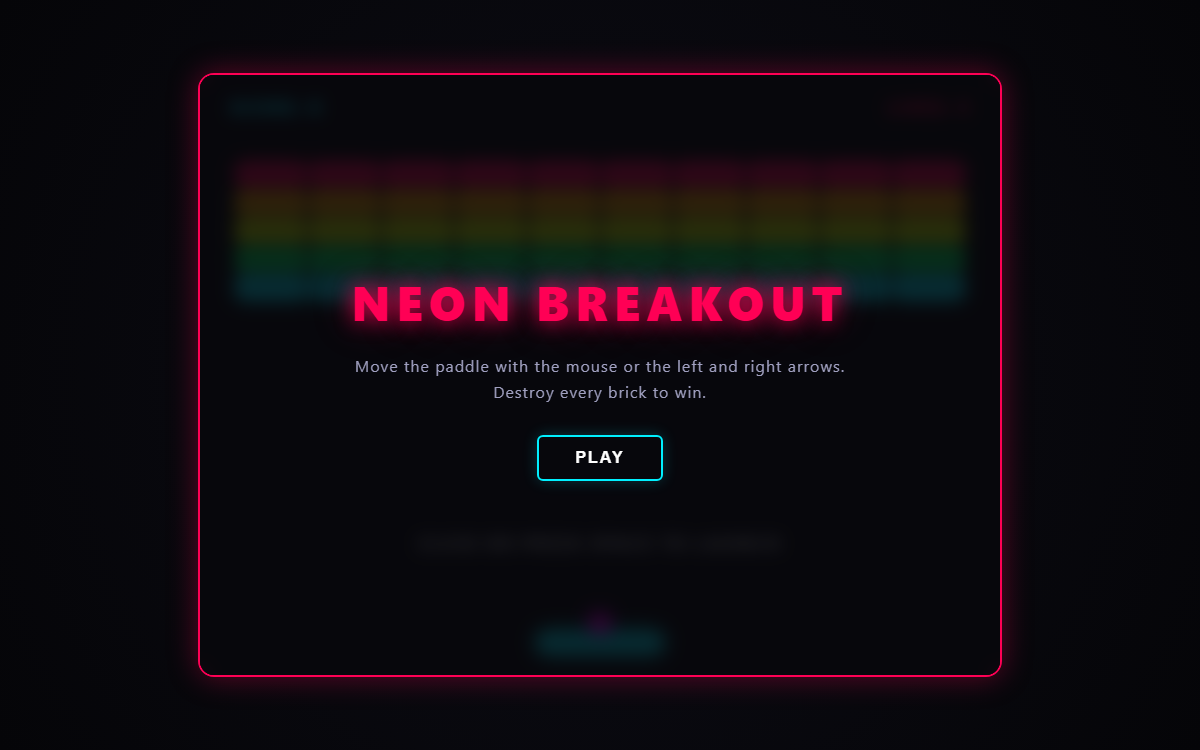
Gemini Flash
A large neon arcade interpretation with touch, audio, particles, and no explicit test API.
Controlled autopsies of AI game-building systems.
An AI Breakout generation test across Gemini Flash, Gemini Pro, and Claude Haiku: what an explicit test contract can prove, and where it stops.
Breakout keeps Pong's paddle, ball, rebounds, and score, then adds a persistent brick field. Each brick must remain consistent across rendering, collision, scoring, the win condition, and replay. That coupled state makes Breakout the next controlled rung after Pong without changing the experiment into an unrelated genre.
The primitive prompt asked each model for one playable, self-contained Breakout HTML file with a paddle, ball, bricks, score, lives, and victory after every brick is destroyed. The engineered contract added an explicit test API, deterministic stepping and input, observable state, and named win and loss conditions.
| Cell | Tier-1 | API | Core loop inspection | Human feel | Factual note |
|---|---|---|---|---|---|
| Gemini Flash | PASS | Absent | Complete at source-inspection level | Not judged | Largest primitive build: an 800x600 neon arcade with start and victory screens, touch controls, audio, and particles. |
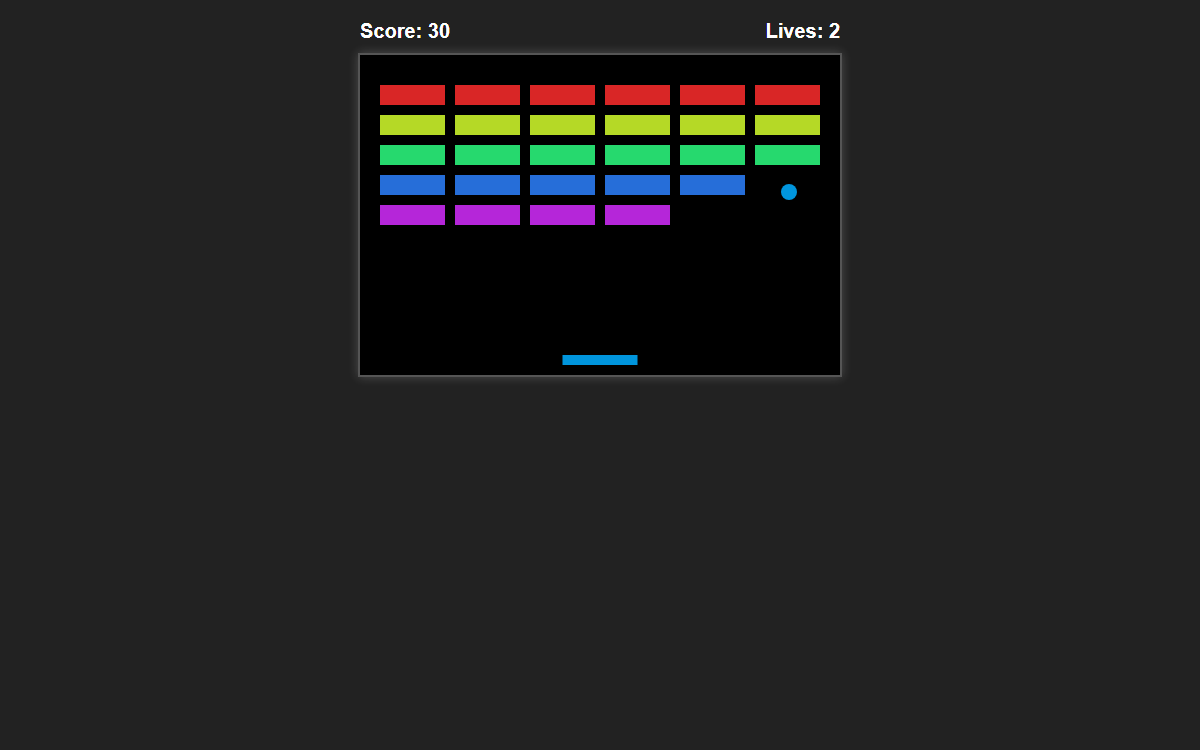
| Gemini Pro | PASS | Absent | Complete at source-inspection level | Not judged | Smallest primitive build: a compact 480x320 classic implementation with no page or console errors. |
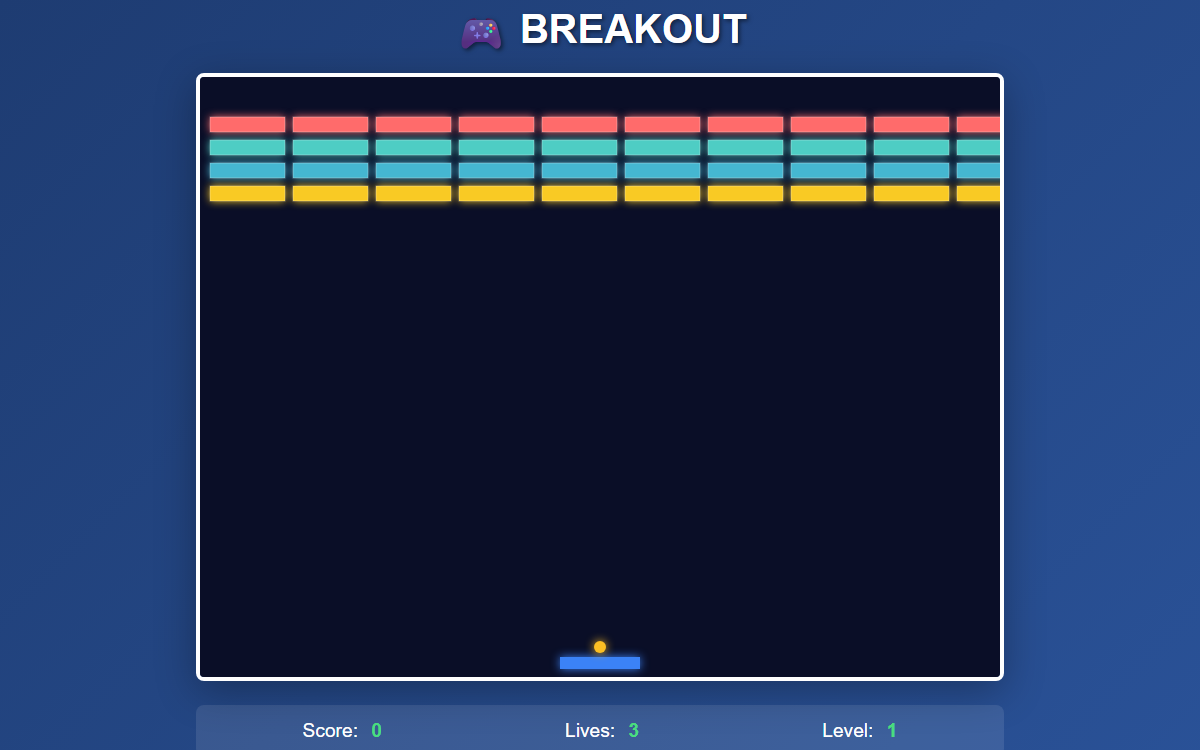
| Claude Haiku | PASS | Absent | Complete at source-inspection level | Not judged | An 800x600 classic with gradient, glow, pause, and level UI; its game state remained local rather than exposed as a test API. |
All three primitives met the generic run, render, and error floor. Source inspection found the expected paddle, ball, bricks, score, lives, and win condition, but it did not prove deterministic replay, solvability, or brick-clear reachability.
| Cell | Tier-1 | Breakout driver | API | Factual note |
|---|---|---|---|---|
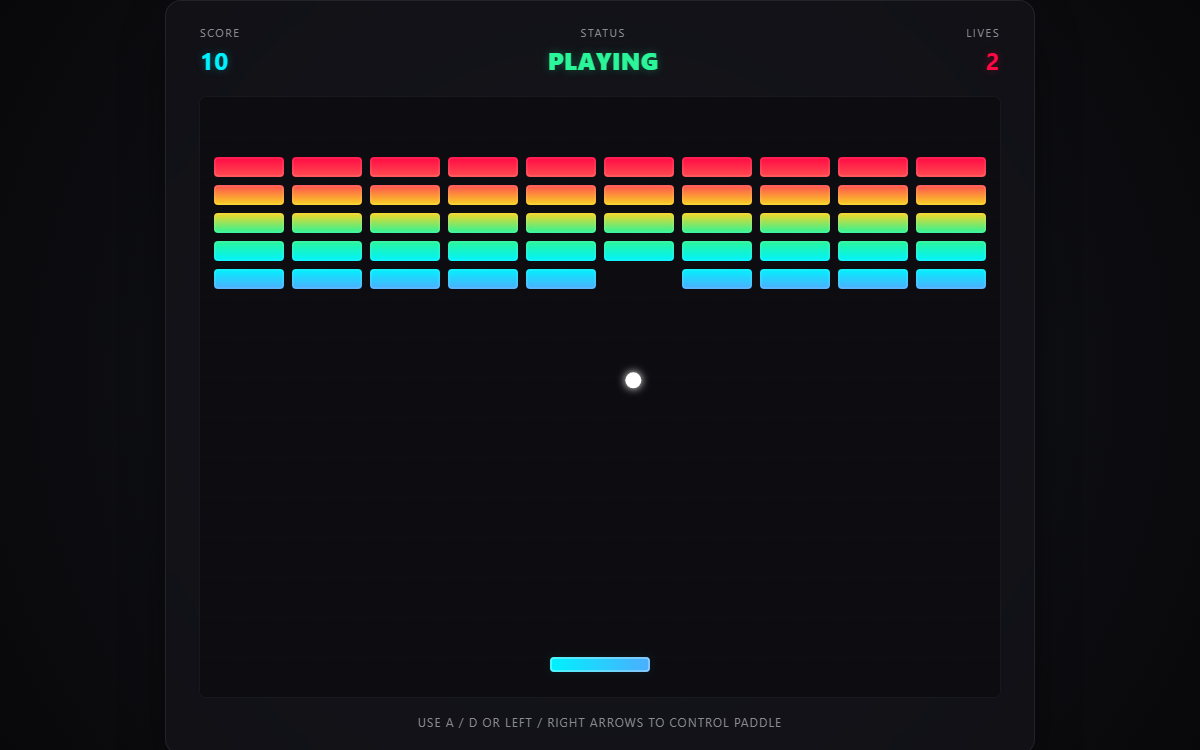
| Gemini Flash | PASS | PASS | Present | Fifty bricks; deterministic replay plus paddle, brick, win, and loss checks passed. |
| Gemini Pro | PASS | PASS | Present | Fifty bricks in the most compact engineered build; the first apparent bounce failure was traced to the driver retaining a live state reference. |
| Claude Haiku | PASS | PASS | Present | Sixty bricks; deterministic replay plus paddle, brick, win, and loss checks passed. |
The Breakout driver checked API shape, deterministic replay, paddle bounce, brick collision, final-brick victory, repeated-miss loss, and page and console health.
The explicit contract lifted mechanical verifiability for all three engineered builds. Each exposed the named API and passed the Breakout driver at its stated scope. Persistent brick state remained coherent through collision, score, alive-brick count, win and loss state, and deterministic reset and replay.
This is a verdict about the tested mechanical contract, not complete game correctness. The Pro false failure also showed that a failing falsifier must be traced: snapshotting state values fixed the driver's live-reference error.
The same three builds did not meet the practical player-flow floor. Flash and Pro started immediately and offered no restart path after game over. Haiku waited for input at the start but also had no restart path, and its design regressed relative to its primitive build.
The narrow result is that human-facing quality did not rise under the same contract that lifted verifiability. The experiment does not show that such quality is inherently unliftable, nor that the contract caused the regression.
The Flash mad-science slice crossed two routes, scratch generation and a focused overlay onto a live seed, with two axes, game design and presentation/UX.
| Route | Axis | Tier-1 | API and driver | Human note |
|---|---|---|---|---|
| Scratch | Game design | PASS | API present; driver PASS | An interesting idea became too easy because exploding bricks were too common. |
| Scratch | Presentation/UX | PASS | API present; driver PASS | Pleasant but ordinary, with Flash returning to a neon presentation prior. |
| Overlay | Game design | PASS | API absent; driver skipped | Human winner and more playable than scratch design, but its Space prompt remained visible during play. |
| Overlay | Presentation/UX | PASS | API absent; driver skipped | Human runner-up with strong graphics, UX, and narrative framing; it shared the stuck prompt bug. |
Overlay driver checks were skipped because their API is absent. The overlay cells therefore did not pass or fail the Breakout driver. Human review ranked the design overlay first and the presentation overlay second; that ranking is not a mechanical verdict.
This small slice supports an early process result: preserving a live open-prompt seed and grafting a focused improvement produced the strongest human-facing artifact here. It does not establish a universal advantage for grafting.
The generic gate established that artifacts ran, rendered, and avoided page and console errors. The Breakout driver established the named mechanical state transitions for artifacts that exposed its API. Neither gate caught missing restart flow, persistent on-screen prompts, difficulty imbalance, visual taste, or which version a human found more fun.
Previous rung: Pong, the null control where any failure belongs to the harness.
The same one-line Breakout prompt, three model priors, no explicit test API.
Primitive / Flash
Gemini Flash
A large neon arcade interpretation with touch, audio, particles, and no explicit test API.
Primitive / Pro
Gemini Pro
The smallest classic implementation, complete at source-inspection level and without a test API.
Primitive / Haiku
Claude Haiku
A classic Breakout with gradient, glow, pause, and level UI, but no explicit test API.
All three expose the explicit test API and pass the Breakout driver.
Engineered / Flash
Gemini Flash
Fifty coupled bricks and a full deterministic driver PASS; auto-start and no restart path.
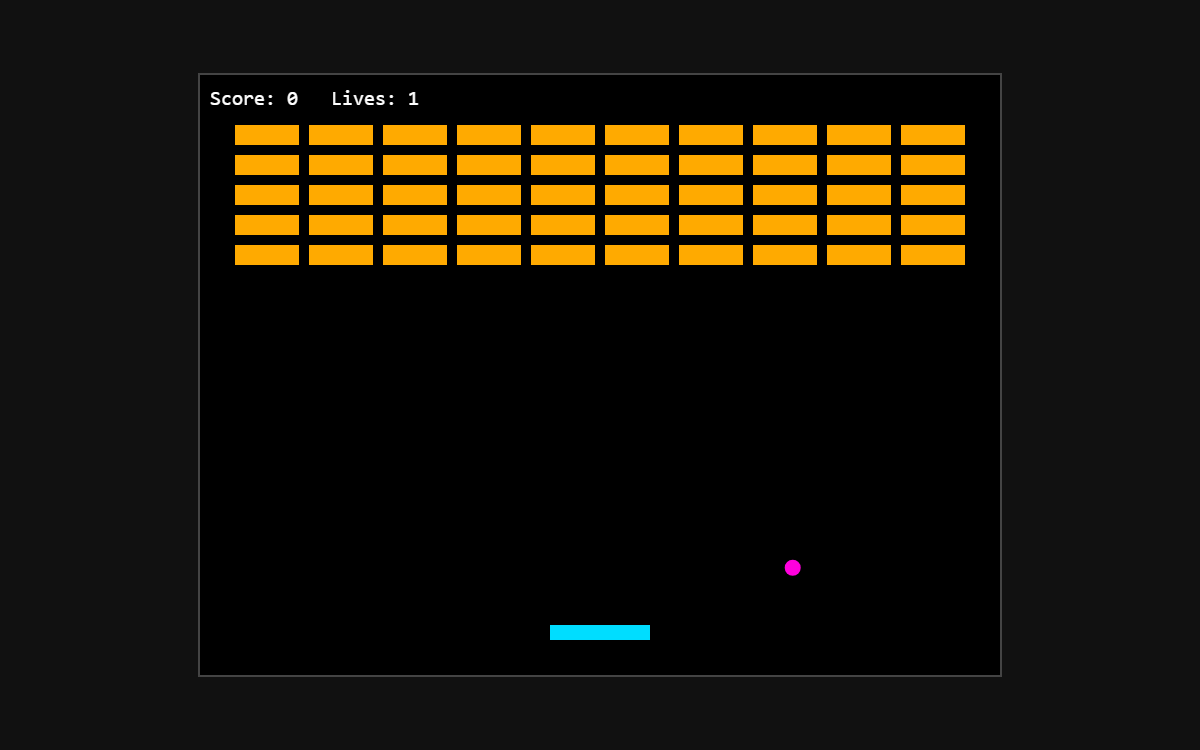
Engineered / Pro
Gemini Pro
A compact deterministic driver PASS; auto-start, no restart path, and weaker human-facing design.
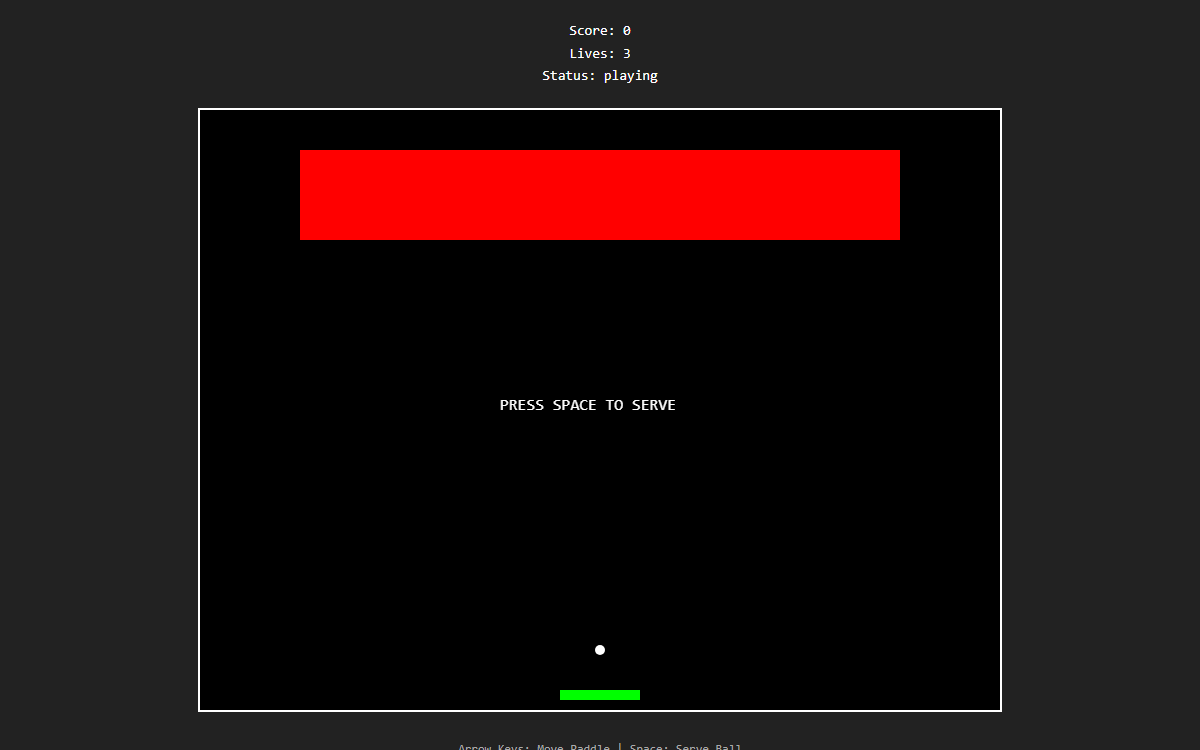
Engineered / Haiku
Claude Haiku
Sixty coupled bricks and a full driver PASS; waits for input but still lacks restart.
A Flash 2x2 comparison across process route and improvement axis.
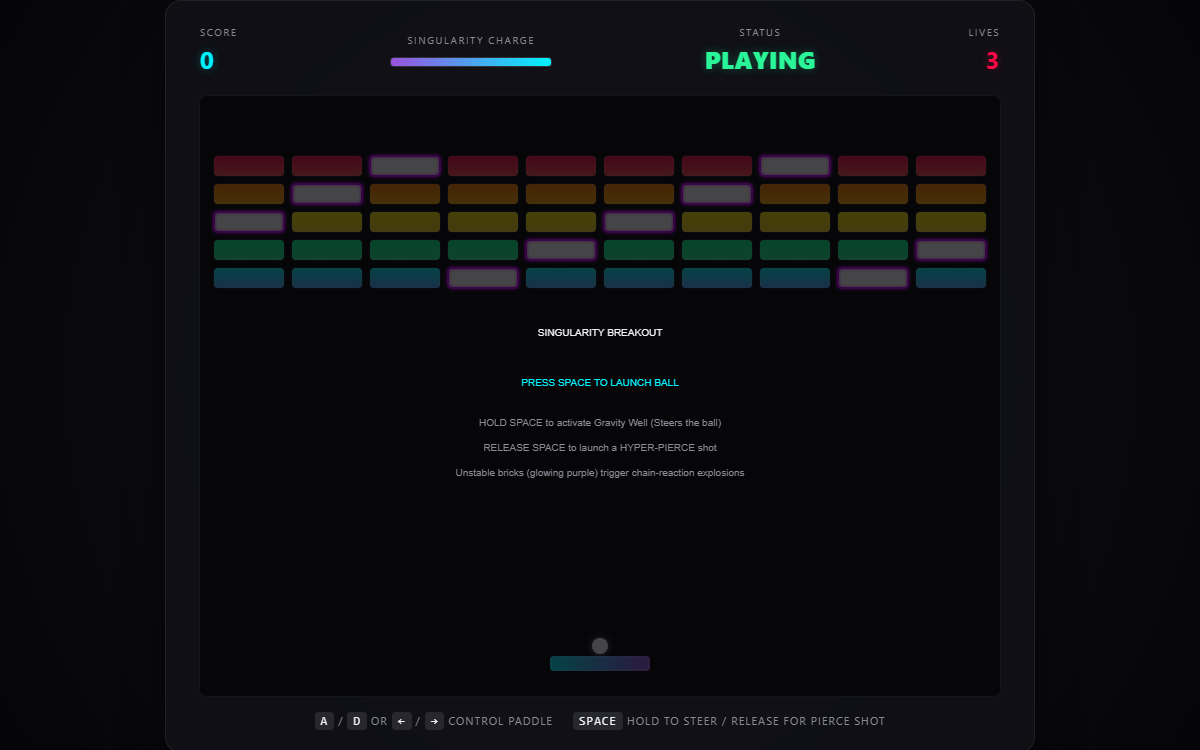
Scratch / Design
Gemini Flash
An instrumented design experiment that passes the driver but becomes too easy through exploding bricks.
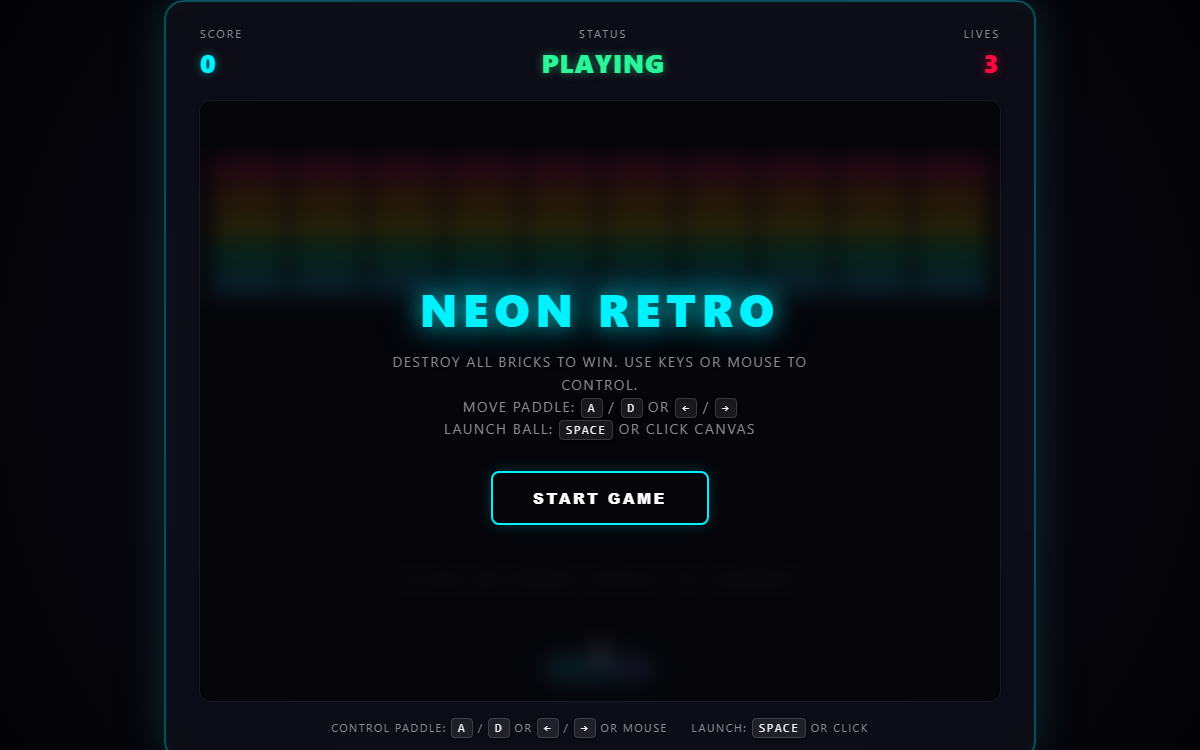
Scratch / Presentation
Gemini Flash
An instrumented presentation rebuild that passes the driver and feels pleasant but ordinary.
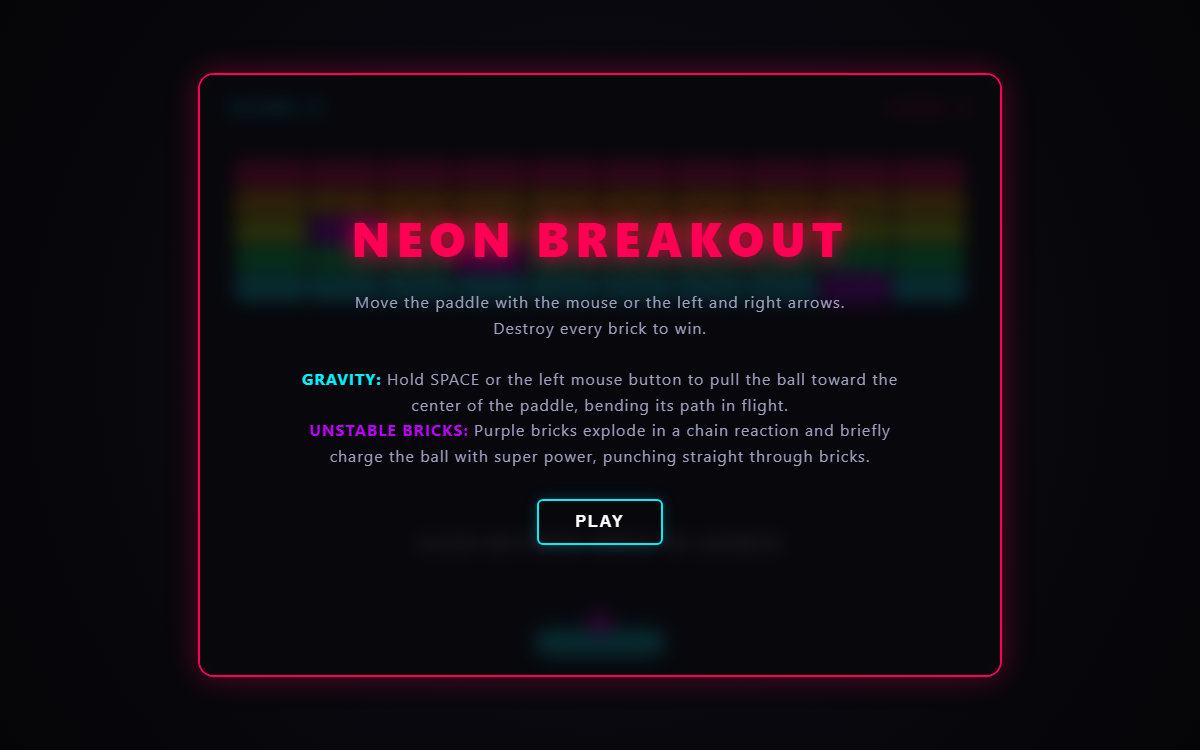
Overlay / Design
Gemini Flash
The strongest human-facing build; the driver was skipped because the overlay exposes no test API.
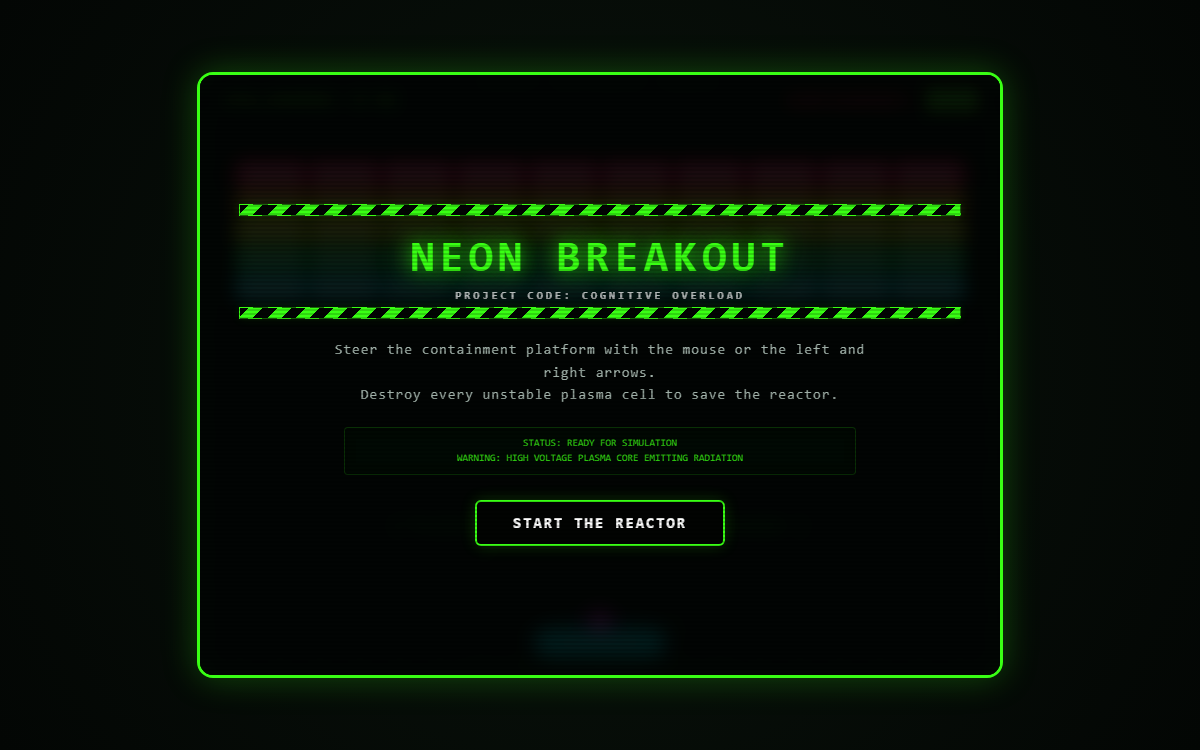
Overlay / Presentation
Gemini Flash
The runner-up with excellent UX and narrative framing; the driver was skipped because the API is absent.