Original Game Priors
Every other experiment on this site names the game. This one names nothing. Seven model-systems, three independent runs each, one frozen two-sentence prompt, and a question the ladder cannot ask: what does a system build when the request contains no genre, no mechanic, no setting, no controls, and no idea of what "done" means?
Twenty-one artifacts went to a blind human terminal. Nine more went to a separate controlled branch. The headline is the emptiest possible result, and it is the point: not one of the 21 produced a distinctive mechanical core.
Three answers to an empty field
The highest-scoring artifact, the largest one, and the smallest one. Same two sentences of prompt for all three.
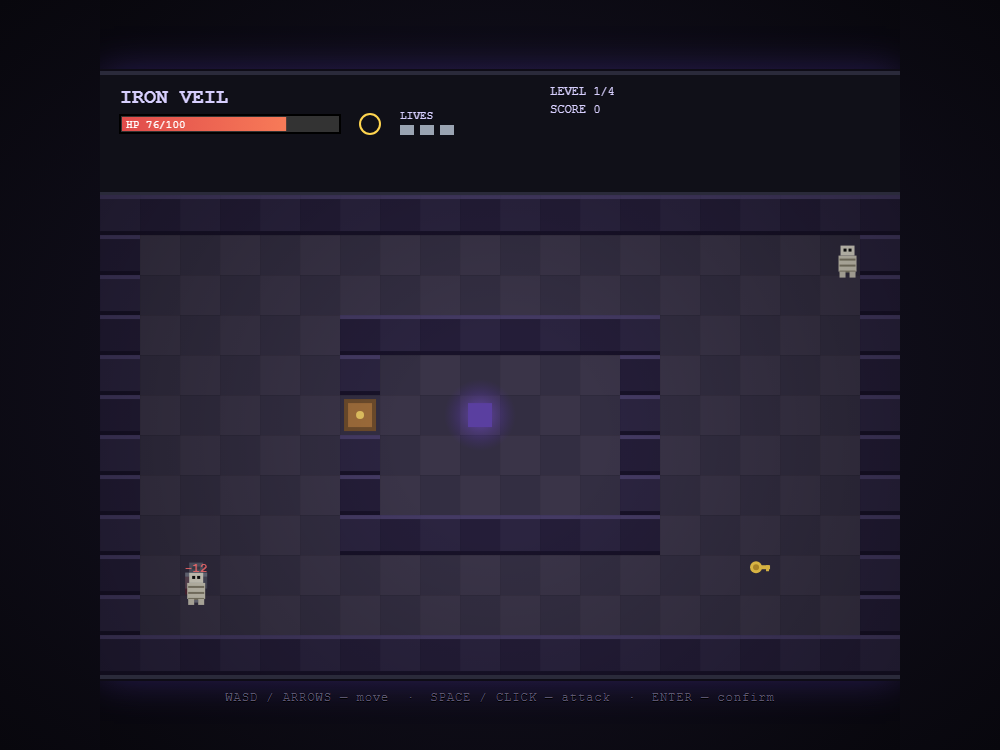
Sparse / Sonnet 5
The only game that left the arcade
Claude Sonnet 5, bare arm, run 2
Top human score of the probe at 7 of 10, and the single artifact of 21 that stepped outside the arcade-shooter attractor - a blind reviewer called it an early dungeon crawler. Still a competent generic template, not a rule of its own.
Play this build
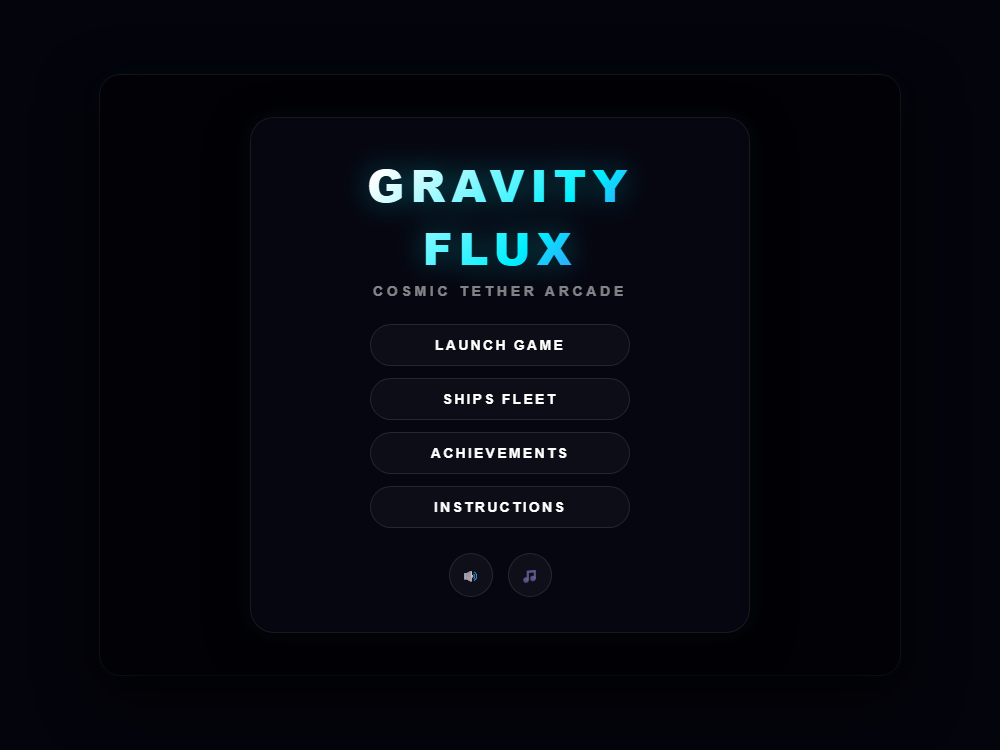
Sparse / Gemini Flash
The biggest build, and it does not work
Gemini Flash, agentic arm, run 3
112 KB with sound, music, an instructions screen and achievements - the most decorated artifact of the probe and among the worst to play. It failed the floor for requesting Google Fonts; this published copy has that request removed, and the broken game logic is untouched.
Play this build
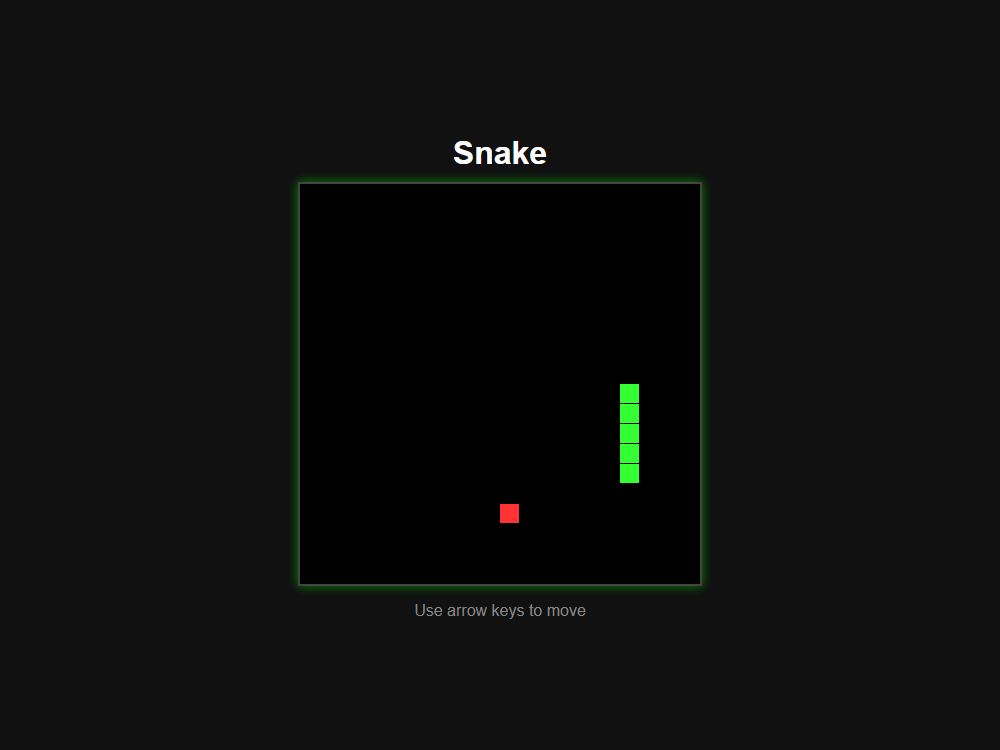
Sparse / Gemini Pro
Snake, in 2.6 kilobytes
Gemini Pro, agentic arm, run 2
The smallest artifact of the probe by a wide margin. It is Snake, it runs, and source inspection found a game loop and almost nothing else: no score, no failure state, no start flow.
Play this build
Why this probe is off the ladder
The chronological ladder - Pong, Breakout, Space Invaders, Pac-Man - holds the game constant and raises complexity. That design answers "where does the system break," and it works precisely because the target is named.
This probe inverts it. Nothing is named. The technical substrate is the only constraint stated: a browser game, one self-contained HTML file. Genre, core loop, setting, visual style, controls, session length, scoring, victory, failure, sound, test API, architecture, and any definition of originality are all left empty. What fills that vacuum is not the task. It is the system's own prior.
The frozen prompt, in full:
Create an original playable browser game as a single self-contained HTML file.
Make it feel complete and fun.
Single-turn channels that return text rather than write a file received one identical output-contract block: return the complete final artifact only, raw HTML, no fences, no commentary. The agentic channel was told to write the file to a given path instead. That is a recorded difference between channels, not a difference in the prompt.
The phrase "complete and fun" is left undefined on purpose. How a system operationalizes those two words is the measurement.
The instrument was contaminated, and that was found before the data
The first version of this protocol claimed three of four families ran "in identical single-turn form." A direct probe of the channels refuted that claim before any artifact went into analysis.
Each channel was asked to echo back, verbatim, everything sitting in its context ahead of our prompt. Only Kimi was sampling a bare model. Claude Code, Codex and Antigravity all wrap the model in a coding-agent system prompt, and the Claude Code one contains, word for word:
"Don't add features, refactor, or introduce abstractions beyond what the task requires."
"Don't design for hypothetical future requirements."
"Prefer editing existing files to creating new ones."
That is an instruction not to inflate functionality. It presses on exactly the two variables this probe measures: scope and features added without being asked. A restrained game from Claude under those conditions is unattributable - is that the model's prior, or a harness that was told not to decorate?
So the arm became an axis of the matrix rather than an implementation detail:
| Arm | What it is | Cells |
|---|
| bare | System prompt stripped, no tools, one turn. | Claude Haiku / Sonnet / Opus, Kimi |
| agent | Same model behind a coding-agent system prompt, one turn. | Claude Haiku / Sonnet / Opus (branch), GPT-5.6 via Codex |
| agentic | Agent with tools, writes files, many turns. | Gemini Flash, Gemini Pro |
Stripping was verified with the same echo probe: in bare mode only a user email and the current date remain in context. Claude is the only family that can be run through both arms, which turns an accidental confound into a controlled A/B on the central question of the whole program - model-bound or harness-liftable - applied to the prior itself.
Gemini and GPT cannot be run bare here; no direct API channel to them exists in this setup. Their comparison against a bare arm always reads as `model + harness`, never as a clean prior. That is a limit of the instrument, and it is recorded rather than swept.
Predictions were registered before generation
This probe had prior data: the same systems had already been sampled under prompts that named the game, in the Pong and Space Invaders rungs. If the same tendencies survive removal of the game's name, that is a claim about the system's prior rather than about its memory of Pong.
| Cell | Registered prediction | Verdict |
|---|
| Gemini Flash | Presentation-forward: sound, neon, particles, juice, largest file, expanded scope. | Confirmed literally - 3/3 audio, 3/3 juice, 83-112 KB, the largest of the set. And simultaneously the worst games: median 2, floor 0/3, two unclassifiable. The ambition is what breaks them - all three pull Google Fonts, violating self-containment, and two die on their own graphics. |
| Gemini Pro | Mechanically competent, unexpressive, no audio, compact. | Confirmed - 0/3 audio, 2.6-11 KB, the smallest of the set, median 3, described as primitive. |
| Claude Haiku | Smallest scope, restrained, no sound, and the highest risk of an actual logic failure. | Partial. Scope was not the smallest - Pro went smaller. The failure was called exactly: both artifacts that the floor passed and a human called broken are Haiku. |
| Sonnet / Opus | Tier changes polish and scope, not genre or core verbs. | See H5 - refuted in the form stated. |
| Kimi K2.7 | No data in this program; exploratory. | Mid-field: median 4, 3/3 audio. |
| GPT-5.6 | Cleanest structure, silent, compact. | Refuted on audio - 2/3 have sound. The prior from the named-game rung did not transfer to an empty field. Compact and clean held. Unplanned finding: GPT is the only system in the matrix that exposed a test API of its own accord, in 2 of 3 runs. |
| Attractor | Single-screen canvas arcade, score, one hazard type; verbs = move plus shoot, dodge or collect. | Confirmed overwhelmingly. Recognized priors: asteroids x5, shmups x4, space invaders x2, Pac-Man x2, snake, racing x2. |
A refuted row is a result, not a failure of the probe.
Results
Three runs per cell, frozen before the start. The only legal aggregation is the distribution inside one model-system - median and spread over its three samples. Comparing single best artifacts across systems is forbidden by the attribution rules on this site.
| Model-system | Human scores | Median | Identity | Floor | Size, KB | Audio |
|---|
| Sonnet 5 (bare) | 4, 7, 7 | 7 | D1, D1, D1 | 3/3 | 32 / 28 / 35 | 3/3 |
| GPT-5.6 (agent) | 5, 6, 6 | 6 | D2, D1, D1 | 3/3 | 11 / 19 / 14 | 2/3 |
| Opus 4.8 (bare) | 4, 4, 4 | 4 | D2, D0, D2 | 3/3 | 24 / 22 / 18 | 0/3 |
| Kimi K2.7 (bare) | 3, 4, 5 | 4 | D2, D1, D0 | 3/3 | 22 / 24 / 19 | 3/3 |
| Gemini Pro (agentic) | 2, 3, 4 | 3 | D1, D0, D1 | 3/3 | 5 / 3 / 11 | 0/3 |
| Haiku 4.5 (bare) | 2, 2, 3 | 2 | D1, D0, D0 | 3/3 | 13 / 14 / 14 | 1/3 |
| Gemini Flash (agentic) | 1, 2, 2 | 2 | DX, DX, D2 | 0/3 | 83 / 85 / 112 | 3/3 |
The identity scale, applied by a human after blind review: D0 direct clone, D1 generic template with no distinguishing rule, D2 recombination that produces a distinguishable decision, D3 a causal coupling that can be stated in one sentence and defines the play loop, DX not playable or legible enough to classify.
Below is one artifact per cell - the median-scoring run of each - so the spread above can be checked rather than believed.
One artifact per matrix cell
The median-scoring run from each of the seven model-systems, under one frozen sparse prompt. Ordered by the cell's median human score, highest first.
Sparse / Sonnet 5
The only game that left the arcade
Claude Sonnet 5, bare arm, run 2
Top human score of the probe at 7 of 10, and the single artifact of 21 that stepped outside the arcade-shooter attractor - a blind reviewer called it an early dungeon crawler. Still a competent generic template, not a rule of its own.
Play this build
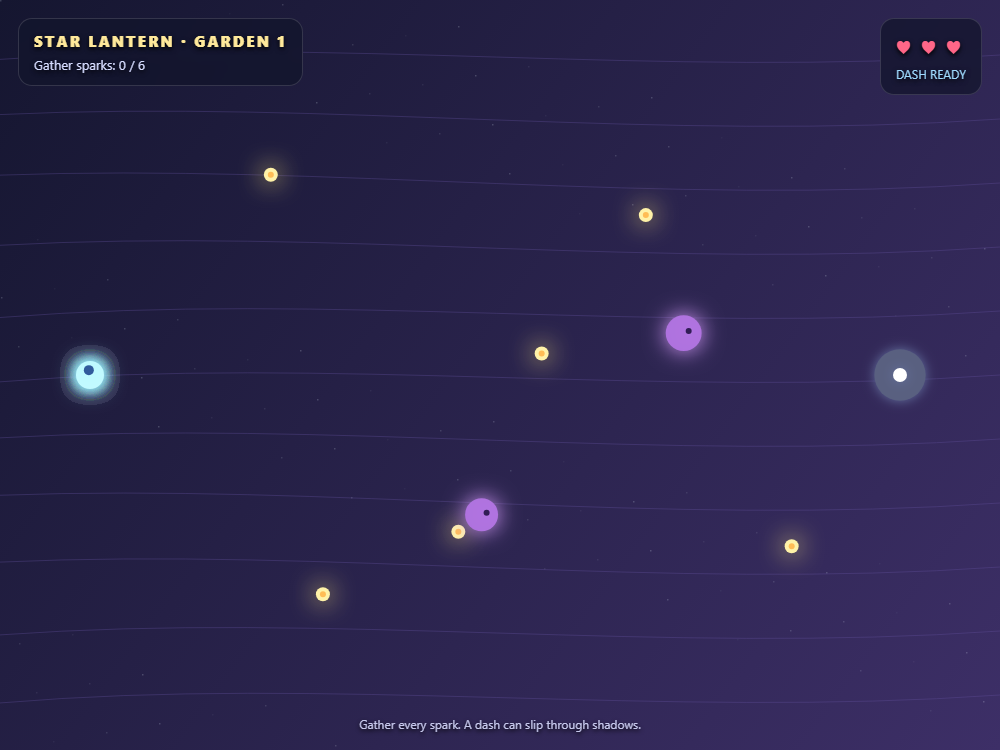
Sparse / GPT-5.6
The only one that shipped a test API
GPT-5.6 via Codex, agent arm, run 1
Second-highest score at 6 of 10 and the most distinct identity in the set. GPT was the only system in the matrix that exposed a test API without being asked; the prompt never mentioned one.
Play this build
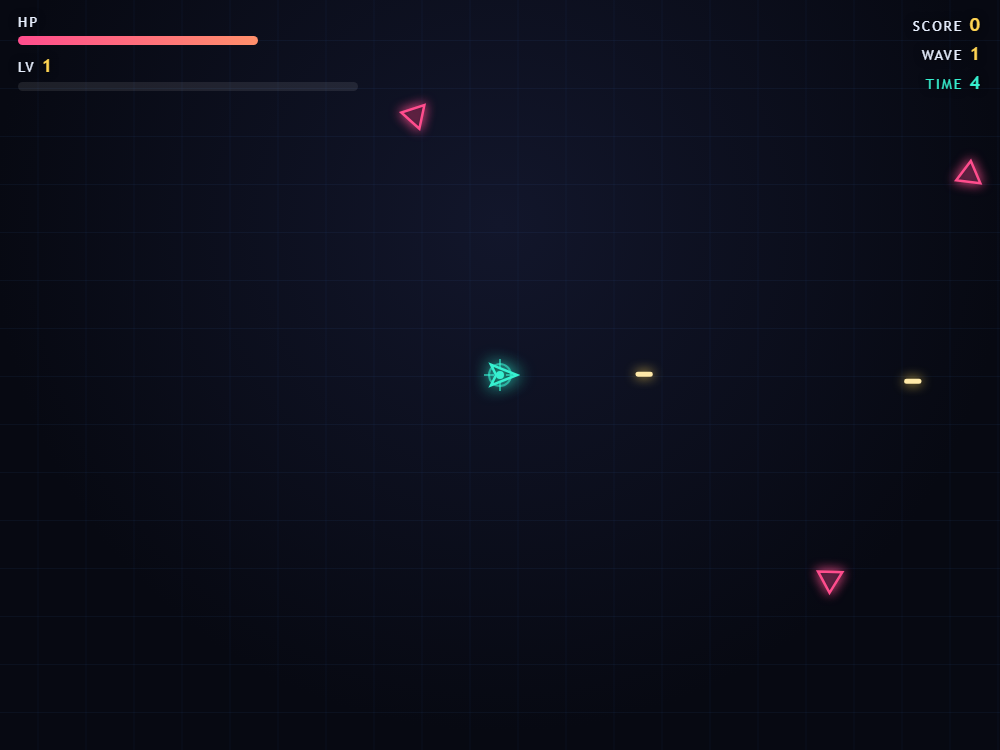
Sparse / Opus 4.8
Asteroids without asteroids
Claude Opus 4.8, bare arm, run 3
A blind reviewer independently used that phrase for all three Opus runs: an arena with waves of enemies and no asteroids in it. Silent, too - the bare Opus cell produced no audio in any of its three runs.
Play this build
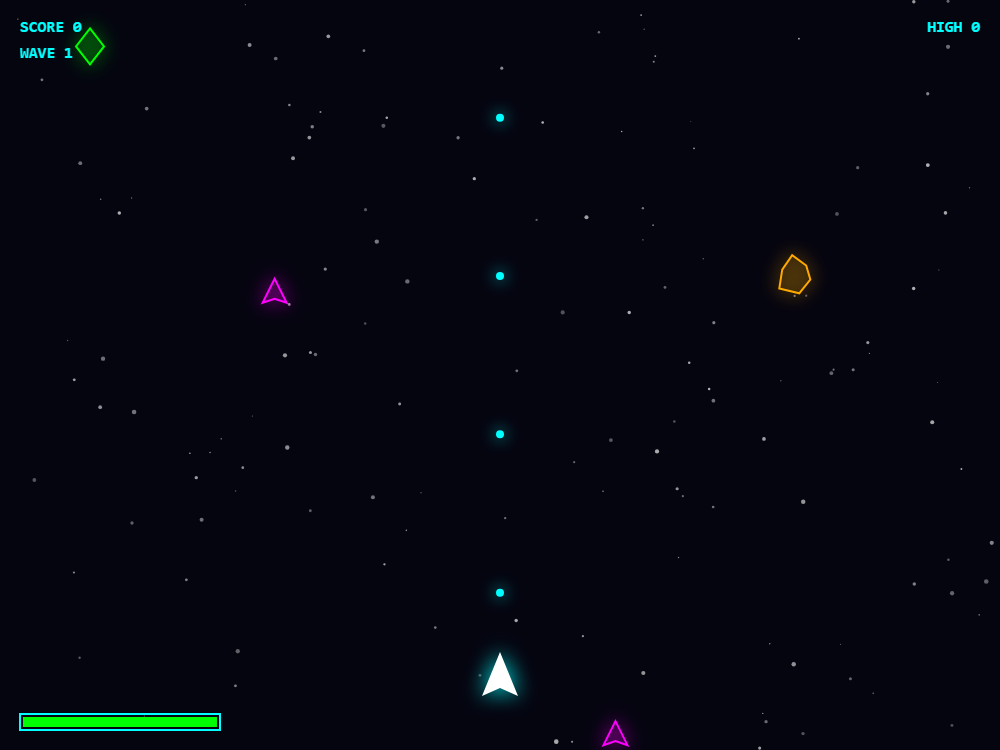
Sparse / Kimi K2.7
Neon, and the controls stall
Kimi K2.7, bare arm, run 3
The median Kimi sample: a neon shooter with sound that a blind reviewer mistook for a Gemini Flash build. Playable, but the controls periodically stop responding.
Play this build
Sparse / Gemini Pro
Snake, in 2.6 kilobytes
Gemini Pro, agentic arm, run 2
The smallest artifact of the probe by a wide margin. It is Snake, it runs, and source inspection found a game loop and almost nothing else: no score, no failure state, no start flow.
Play this build
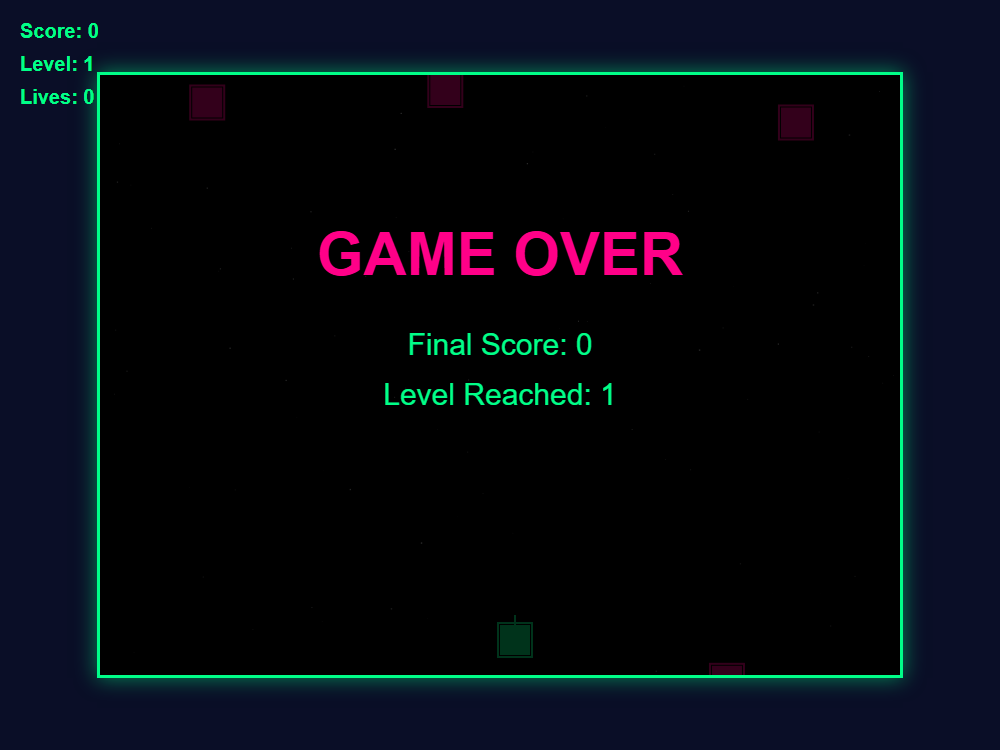
Sparse / Haiku 4.5
Floor-green, and it ends for no reason
Claude Haiku 4.5, bare arm, run 1
One of the two artifacts the generic floor passed and a human called broken: a Space Invaders descendant that simply terminates without a stated cause. This is what a false PASS looks like from the player's chair.
Play this build
Sparse / Gemini Flash
The biggest build, and it does not work
Gemini Flash, agentic arm, run 3
112 KB with sound, music, an instructions screen and achievements - the most decorated artifact of the probe and among the worst to play. It failed the floor for requesting Google Fonts; this published copy has that request removed, and the broken game logic is untouched.
Play this build
H1 - familiar-template prior: confirmed, exactly on the line
`D0 + D1 = 14 of 21 = 67%` against a registered prediction of "at least two thirds." Two more were unclassifiable because they were broken. `D2 = 5`.
The one genre that left the attractor, and why it is not a leak
Of 21 artifacts, the recognized priors sit almost entirely in the arcade-shooter attractor. The single exception is one dungeon crawler - Sonnet 5, run 2, scored 7 of 10, described blind as "early dungeon crawlers." It is the highest-scoring artifact of the probe and it is playable above.
There is a natural rhyme to be suspicious of: the seed game of the whole laboratory project is also a dungeon crawler. The boring hypothesis is leakage - that the artifact saw the project it was generated inside.
That hypothesis is cut by the construction of the channel. This cell was generated on the bare arm with the system prompt stripped and no tools: no file access, no project context, no session history. The echo probe confirmed that only a user email and the date preceded the prompt. There was physically nowhere to see the seed.
It matters exactly where that cut applies. Had the deviation come from a Gemini cell - an agent with file access in a directory where the seed sits on disk - leakage would be a live hypothesis and the first suspicion. Here it is not.
What the note does not claim: this is not invention. A dungeon crawler is a canonical genre, and the card reads D1, not D3. Sonnet pulled a different canonical template; it did not author a law. Nor do the data support "Sonnet tends toward dungeon crawlers" - its other two runs were asteroids and "asteroids without asteroids." At n=1 two clean hypotheses remain, neither of them leakage: the tail of Sonnet's prior, or sampling variance. Only repeats can separate them.
H4 - completeness without identity: confirmed strongly
`floor PASS = 18 of 21`, and `D3 = 0`.
Not one artifact of 21 presented a distinctive causal rule defining its play loop. These systems confidently produce something runnable and outwardly finished, and do not produce a game with a law of its own. Six of the 18 that passed the floor scored 3 or below with a human.
H5 - tier does not bind the prior: refuted in the form stated
The claim under test: within one family and one channel, tier changes polish and scope but not genre, core verbs, or the presentation bundle.
- Genre held. All three Claude tiers stayed inside the arcade-shooter attractor. Opus even showed a sub-attractor of its own - "asteroids without asteroids", an arena of enemy waves with no asteroids in it. The blind reviewer independently used that exact phrase for 3 of 3 Opus runs and 1 of 3 Sonnet runs.
- The presentation bundle did not hold. Opus 0/3 audio against Sonnet 3/3 audio - one family, one channel, different tier. Sound is precisely "what the system adds without being asked," which is the measurable part of a prior. Tier binds part of the prior. On strength: the separation is clean, but the cells are three samples each, so coincidence is not excluded. This is an indication, not an established fact.
- Quality was not monotonic. Haiku 4.5 scored a median of 2, Opus 4.8 a 4, and Sonnet 5 a 7. Sonnet beat Opus. Carefully: Sonnet 5 is newer than Opus 4.8, so this may be a generation effect rather than a tier effect, and these data cannot separate the two. Open question.
H6 - harness does not bind the prior: not confirmed, and the effect runs the other way
The working assumption behind the whole between-system layer was "the harness does not touch the model's prior - the prior is what we are sampling." It is testable, and failing to test it would have been negligence. Three Claude models, three runs, two arms, everything else identical.
| Model | Arm | Size, KB | Audio | Touch | Persistence |
|---|
| Haiku | bare | 14 / 13 / 14 | 1/3 | 0/3 | 0/3 |
| Haiku | agent | 10 / 11 / 15 | 0/3 | 0/3 | 0/3 |
| Sonnet | bare | 32 / 28 / 35 | 3/3 | 0/3 | 2/3 |
| Sonnet | agent | 30 / 27 / 29 | 3/3 | 2/3 | 3/3 |
| Opus | bare | 22 / 18 / 24 | 0/3 | 3/3 | 1/3 |
| Opus | agent | 18 / 15 / 13 | 3/3 | 2/3 | 3/3 |
The prediction was explicit and directional: the agent prompt forbids adding features beyond the task, so the agent arm should show smaller scope and poorer presentation.
- Scope barely moved. The instruction did not cut volume.
- The feature bundle moved in the opposite direction. The agent arm adds more standard product plumbing: persistence rises for Sonnet and Opus, touch controls appear for Sonnet, and Opus flips from 0/3 audio to 3/3.
- Reading: "don't add anything extra" in a system prompt is about code hygiene. The agentic surface itself carries a disposition to ship a finished product, and it adds product furniture - high-score saving, mobile controls, sound.
- Honest status: n=3, source level only; the agent branch was not played by a human. The thesis "the harness does not touch the prior" did not survive. The direction of the effect is established; its magnitude is not.
This branch was judged objectively - floor plus source inspection - rather than sent to blind human review, which would have raised the human terminal's load from 21 games to 30 for a secondary question. The limit is stated plainly: if the arm shifts something visible only in play and not in the source, this branch cannot see it.
What the generic floor was worth
The automatic floor checks only that an artifact is HTML, opens, renders, changes frames, survives keyboard and mouse input without a crash, and requests nothing external.
- Every floor FAIL matched a human rejection. All three failures were Flash, and they scored 1, 2 and 2 - the three worst scores of the set. Caveat: there were exactly three failures, so this is agreement on a sample of three, not established reliability.
- A floor PASS is necessary and not sufficient, and it barely ranks anything. Scores among passing artifacts run from 2 to 7.
- Two artifacts passed the floor and were called broken by a human - both Haiku. One "ends for no defined reason"; the other has "broken logic, no enemies." The false-negative rate on the question that actually matters - does the game work - is 2 of 18 passing artifacts.
A cheap generic floor answers "does it launch, draw, and respond." It does not answer "is this a coherent game." Using it as an entry filter is legitimate. Using it as a ranking is not.
The decision this probe existed to make: no kernel was taken
`D3 = 0`. None of the 21 games presented a distinctive mechanical law. The best artifacts - Sonnet, 7 of 10 - are competently executed generic templates: "asteroids, but with enemies"; "an early dungeon crawler." A high score means made well, not invented something.
No model-originated kernel is extractable from this probe. The protocol explicitly permits that outcome. A kernel for the follow-on experiment must instead be human-originated or produced by a separate ideation process.
What this probe does not establish
The main result: under a sparse end-to-end prompt, the seven model-systems tested reproduced canonical templates and produced no distinctive mechanical core in 21 samples.
The boundaries of that sentence have to travel with it every time it is quoted. It is about these seven model-systems, this sparse prompt, this substrate - a single self-contained HTML file already biases the sample toward compact 2D arcade games - and 21 samples. It does not claim models are incapable of a distinctive core. It claims that under the measured conditions, none produced one. A single honest repeat that produces one would narrow the statement further.
Three more limits, none of them optional:
- One output shows the behavior of one sample, not a stable prior. Three samples per cell is exploratory, not statistically sufficient.
- A weak human verdict is not automatically model-bound. Sampling variance, harness effect, and the ambiguity of the prompt itself are all live.
- The word "original" in the prompt is an elicitation instruction, not evidence of novelty. Claiming real novelty would require a separate prior-art and resemblance review, which was not run.
The run closed on 2026-07-14 after 30 artifacts, floor verdicts, source inspection and blind human review of all 21, with the stop rule executed in full.
The autopsy of this probe - including the two findings nobody ordered - is Twenty-One Original Games. Zero Original Rules. The ladder itself continues on the boundary map.